


Figure 1
Download original image
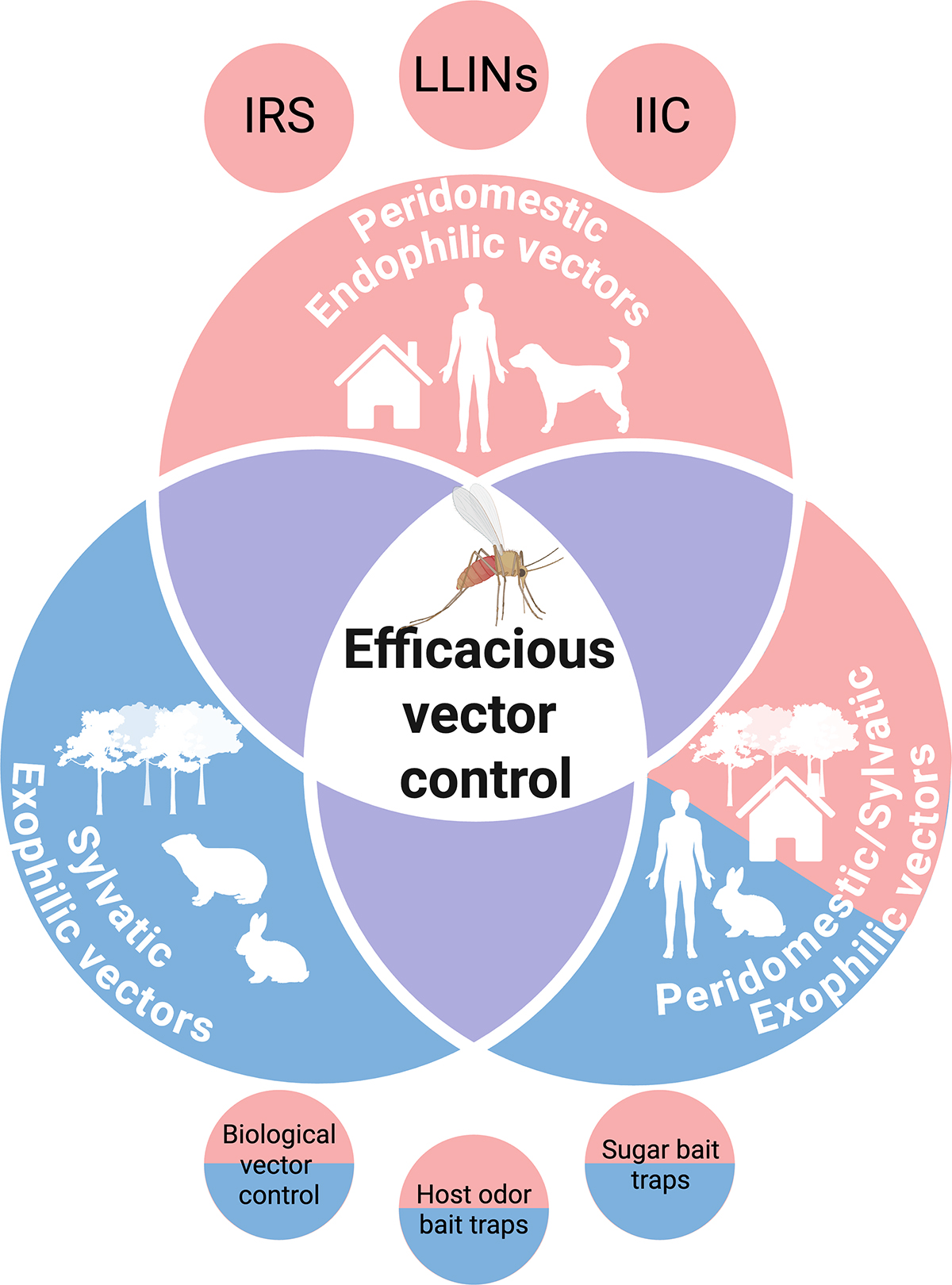
Understanding transmission dynamics for the effective implementation of vector control. In a peridomestic transmission cycle, endophilic vectors feed on disease reservoirs such as humans and dogs. In this scenario, vector control strategies such as IRS, LLINs and IIC are effective. In a sylvatic transmission cycle, exophilic sand flies feed on wild animals. In this case, innovative control tools such as insect bacterial commensals and host odour/sugar bait traps are required. In mixed peridomestic and sylvatic transmission cycles, where the vector is exophilic, the use of IRS, LLINs and IIC may be ineffective, requiring integration of control approaches to effectively interrupt transmission. The purple areas represent zones where there may be spillover between the projected scenarios due to potential changes in human and animal movement, behaviour and environmental drivers such as climate change. IRS: Indoor residual spraying; LLINs: Long-lasting insecticide-treated nets; IIC, Insecticide-impregnated collars. This figure was created with BioRender. Iniguez, E. (2025) https://BioRender.com/l2d3gpc.
Current usage metrics show cumulative count of Article Views (full-text article views including HTML views, PDF and ePub downloads, according to the available data) and Abstracts Views on Vision4Press platform.
Data correspond to usage on the plateform after 2015. The current usage metrics is available 48-96 hours after online publication and is updated daily on week days.
Initial download of the metrics may take a while.